A Christian classical unit study for four- to six-year-olds
One subject, taught all the way through.
Four books, two poems, a science lesson with something to cut open, math, copywork, five days of scripture, and a recipe at the end — all of it about one thing. Written for one child at a kitchen table, and taught in a real classroom before it goes anywhere.
Every page points the same way.
The books, the poems, the science, the math, the scripture and the recipe are all about the same one thing, which is what makes it stick. Every unit is built in the same order, so after the first one nobody has to work out how to use it. Open it Monday, read the books all week, do the rest when there is time.
- Four books
- Read aloud, more than once, in no particular order. Each one is annotated — why it is here and what to watch for. If one is out at the library, four is not the point.
- Two poems
- One short enough to have by heart by Friday, said aloud once a day in an ordinary voice. One too old for them on purpose, read once on the last day and not explained.
- A science lesson
- What the parent needs to know first, written for someone who has not thought about it since school. Then a demonstration to do at the table, and one question to ask afterward.
- An activity and a craft
- Something to do with hands and a result you can look at, and one craft — not five. Ordinary materials.
- A record sheet
- Where the activity gets written down. Boxes to colour, a tally, and room for the child to write what the child can while you write the rest.
- A copywork page
- One sentence from the unit, set on three-line ruling — two traced, the rest blank. Print it as many times as you need.
- Math
- Counting, number bonds to ten, tally marks, more-or-less, and two word problems to read aloud. Tied to the same subject as everything else in the unit.
- A devotion, five days
- Five days at the table, two minutes each — a verse, one sentence about what it means, and one line to pray together. Tied to the same subject as the rest of the unit, so the verse and the thing in the child’s hand are about each other.
- A recipe
- Cooked on the stove at the end. The child’s job and the adult’s job are written out separately, so nobody has to guess who holds the knife.
A look inside
The apple has a star in it.
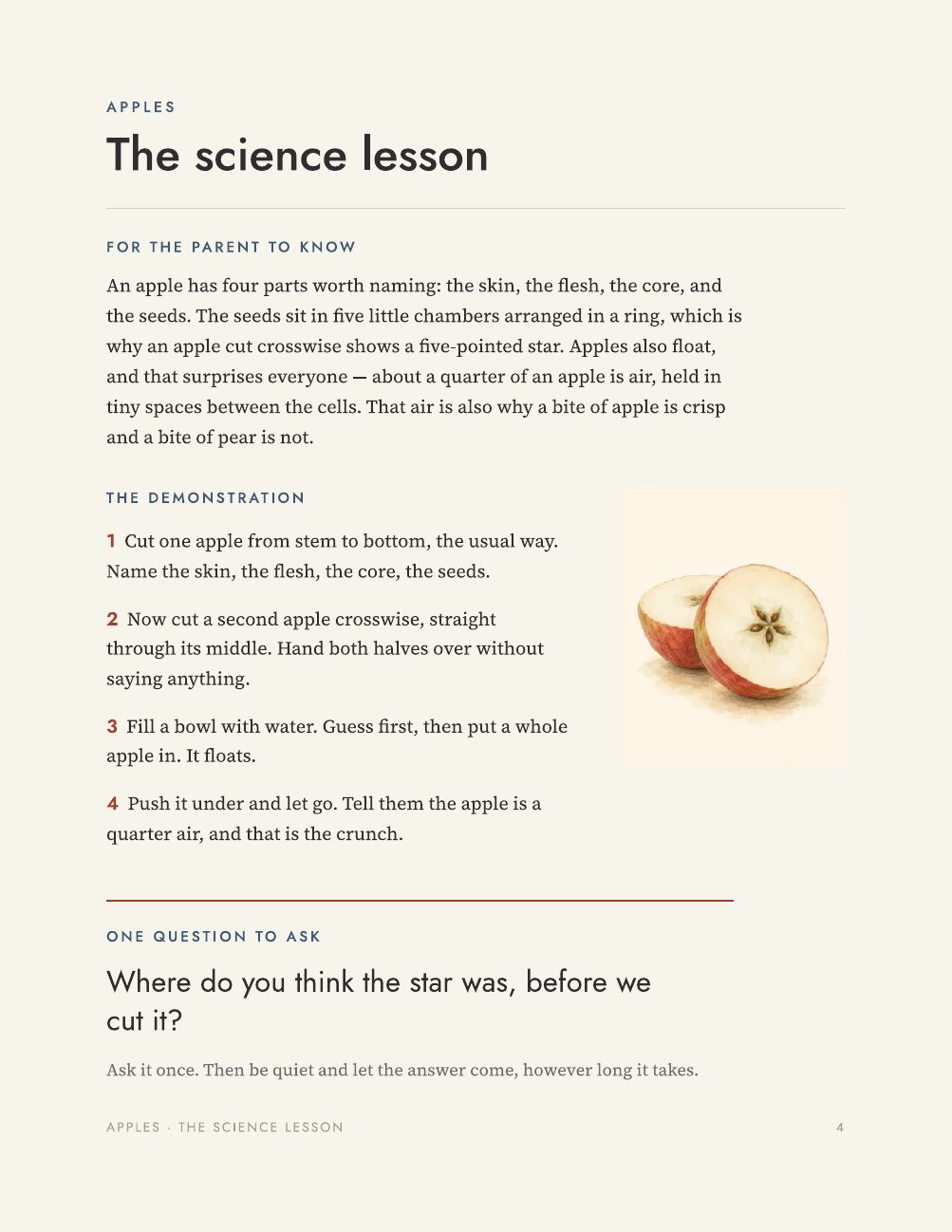
Cut an apple the way everyone cuts an apple and you get two halves. Cut it across the middle instead and the seed chambers make a five-pointed star — one that has been inside every apple the child has ever eaten.
That is the science lesson in the apples unit. The page tells the parent what is going on first, then gives four steps to do at the table, then one question to ask afterward and the instruction to be quiet and let the answer come.
Page ten
Two minutes at the table, before anyone eats.
Every unit carries five days of scripture — one verse, one sentence about what it means, and one line to pray together. Two minutes, before the lesson or before the meal. Nothing more is asked of you.
It is about the same thing as the rest of the unit, which is the part that takes the work. In the unit where we cut apples open and count the seeds, Day One is Genesis — the fruit tree yielding fruit after his kind, whose seed is in itself — and the child is holding a seed while you read it.
Short enough that a four-year-old sits through it.
Written so far
fourunits, and each one stands alone.
Take them in any order. Nothing here assumes you did another one first, and nothing expires.
Unit One
Apples
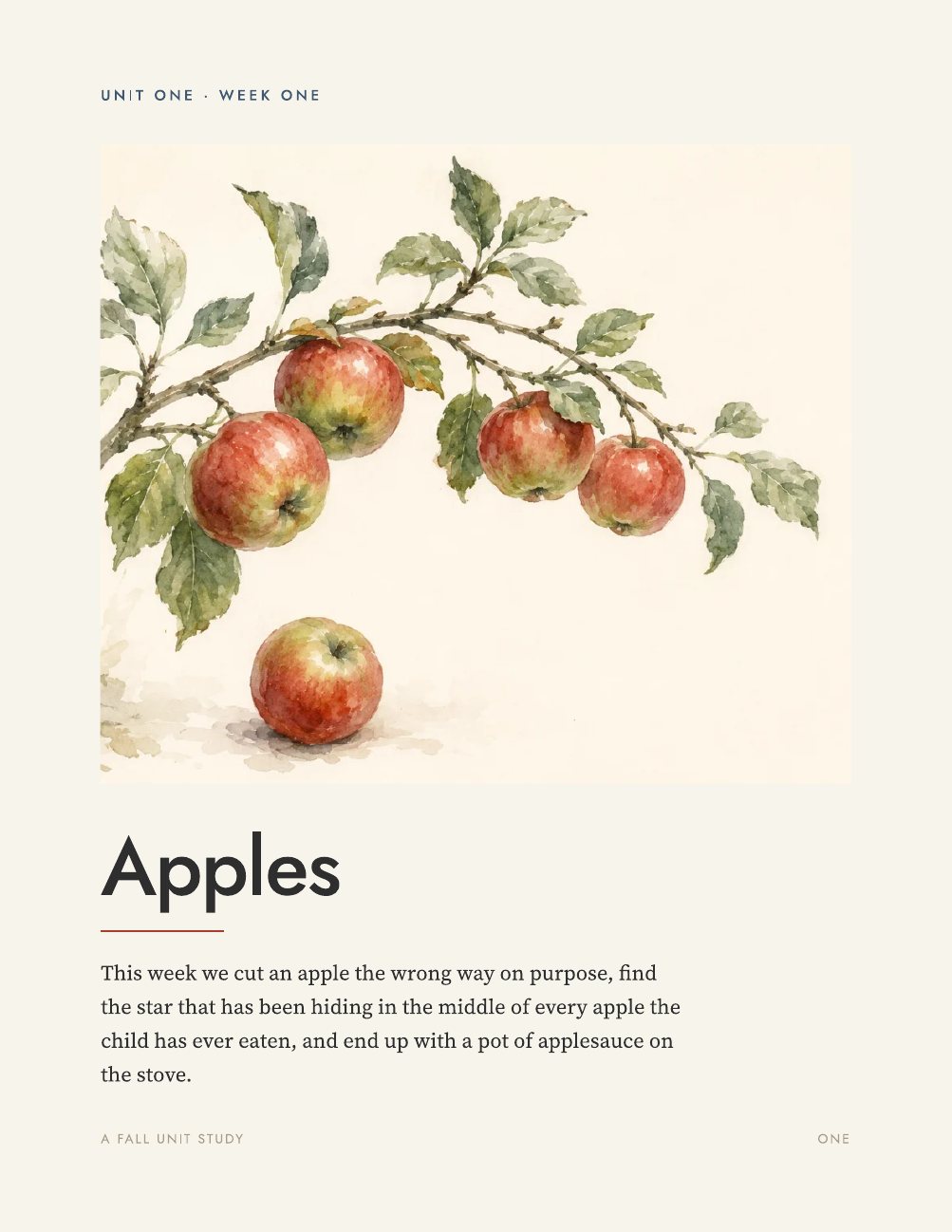
In this unit we cut an apple the wrong way on purpose, find the star that has been hiding in the middle of every apple the child has ever eaten, and end up with a pot of applesauce on the stove.
$5.95
Unit Two
Leaves
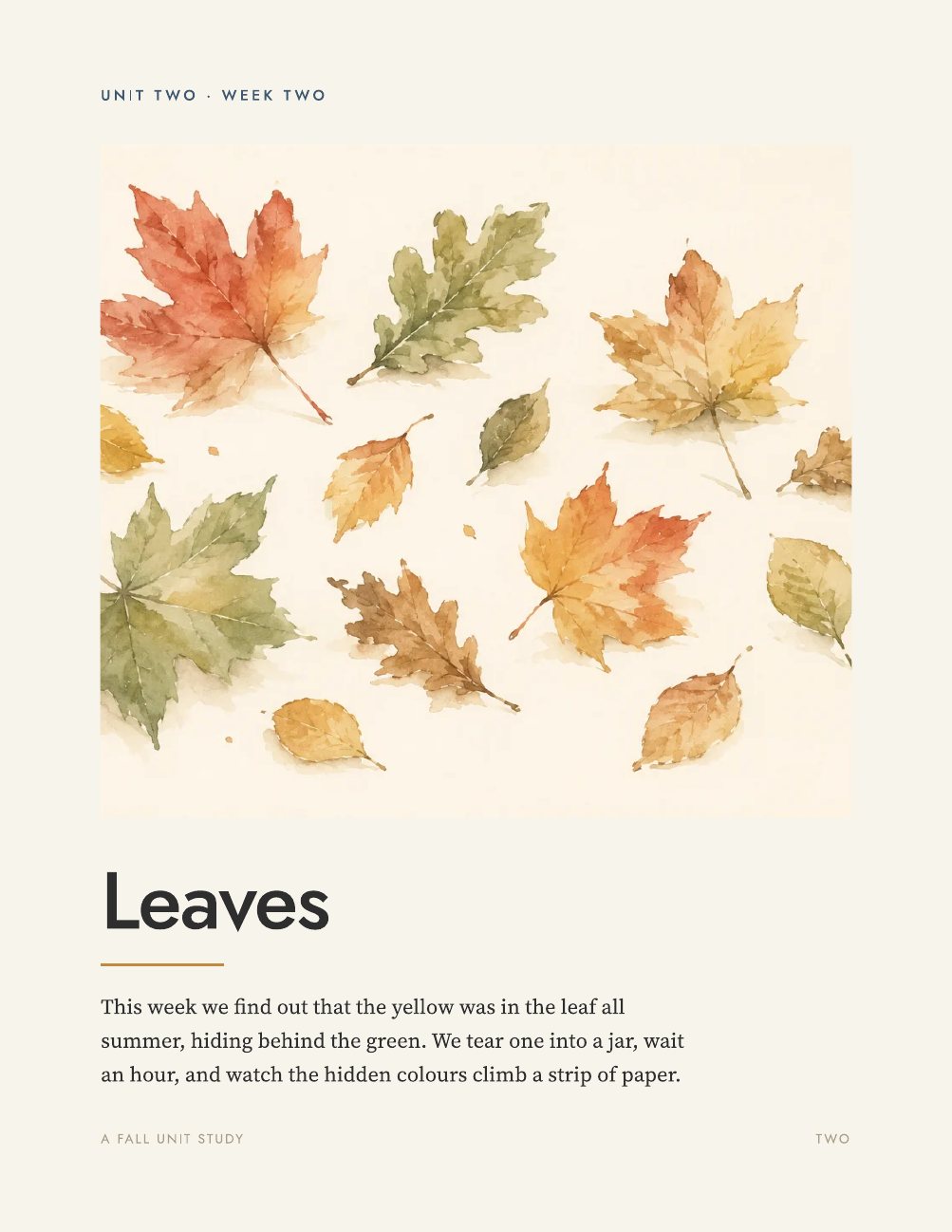
In this unit we find out that the yellow was in the leaf all summer, hiding behind the green. We tear one into a jar, wait an hour, and watch the hidden colours climb a strip of paper.
$5.95
Unit Three
Pumpkins
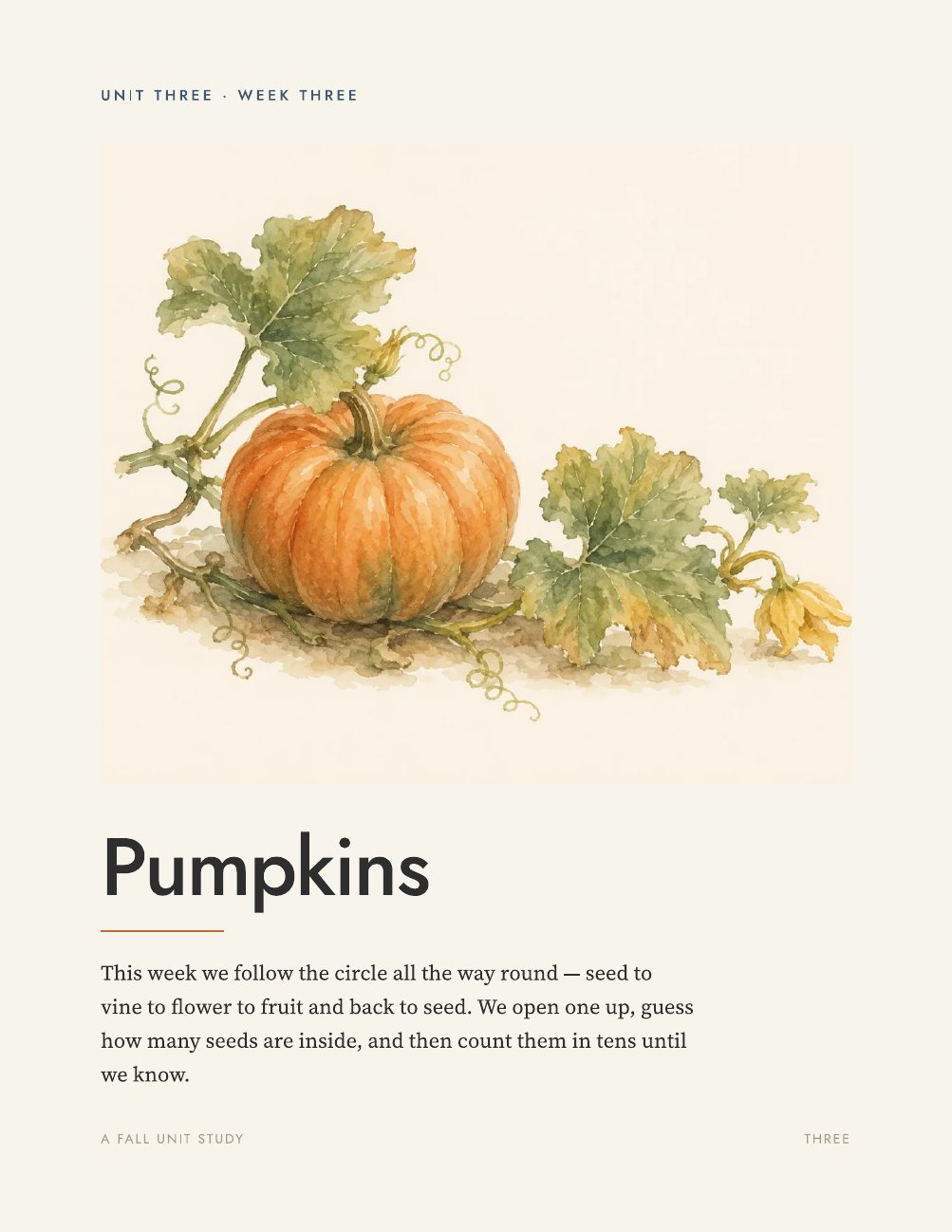
In this unit we follow the circle all the way round — seed to vine to flower to fruit and back to seed. We open one up, guess how many seeds are inside, and then count them in tens until we know.
$5.95
Unit Four
Sunflowers
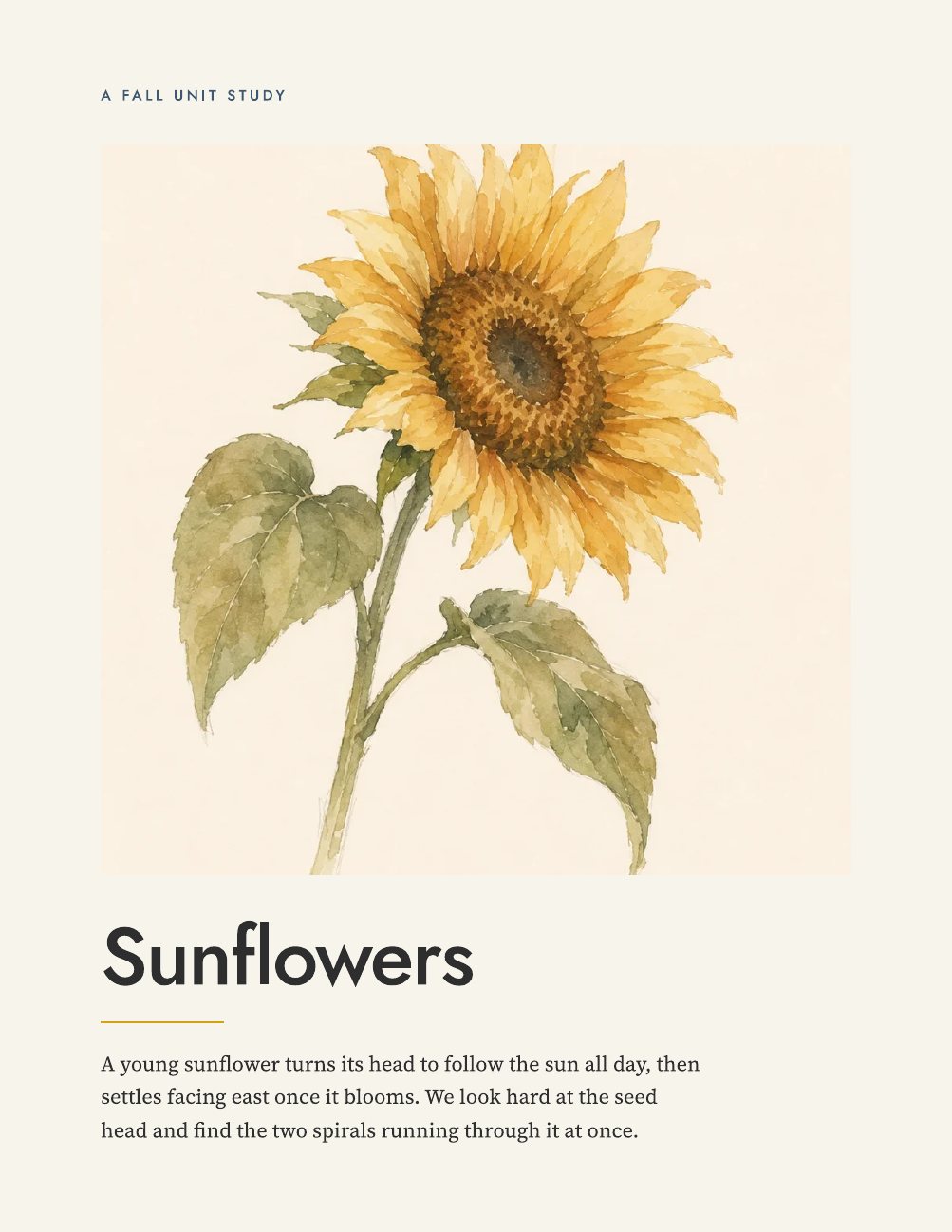
A young sunflower turns its head to follow the sun all day, then settles facing east once it blooms. We look hard at the seed head and find the two spirals running through it at once.
$5.95
Written as they are taught.
There are four units so far. I am writing them as I teach them, which means each one has been used with actual four- and five-year-olds before it goes out, and it also means they arrive slowly.
So there is no subscription and nothing to cancel. You buy a unit, you get that unit, and that is the whole arrangement. When there are enough of them to be worth a monthly price, I will say so.
If you want to know when the next one is finished, the list below is the only way I will tell you.
On its way.
Check your inbox for the copywork page — and the spam folder, if it isn’t there in a few minutes. I’ll write again when the next unit is done.